antiX
Ridiculously light and systemd-free. Breathes life into ancient hardware.
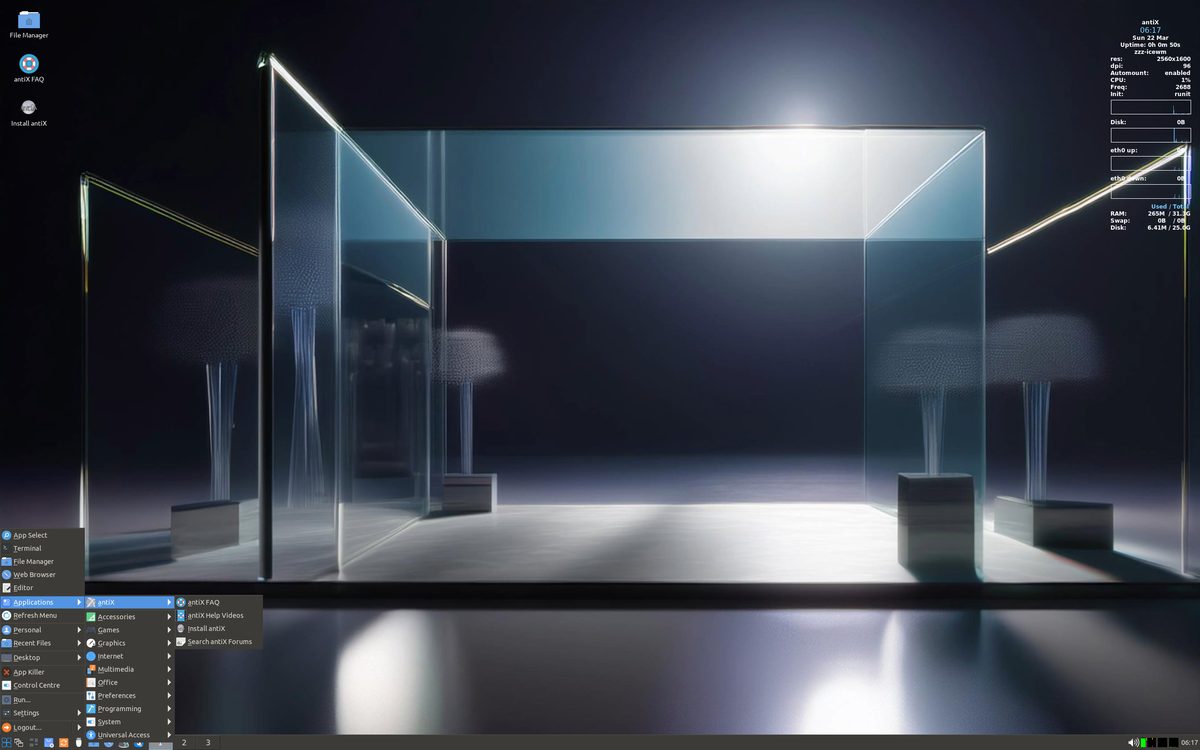
antiX runs where nothing else will. Built on Debian Stable, stripped of systemd, and defaulting to featherweight window managers like IceWM and Fluxbox, it boots a usable graphical desktop in a few hundred megabytes of RAM. Machines from the Windows XP era, thin clients, and single-board computers all come back to life under antiX, and it remains fully Debian-compatible while doing it.
The project is proudly scrappy: live-USB tooling is excellent (persistence, remastering, frugal installs), the menu-driven antiX applications handle system tasks without heavy toolkits, and everything is chosen for weight. The aesthetic is functional, the community is helpful, and the mission is unambiguous. If the hardware still powers on, antiX will probably give it a purpose.
Strengths
- Runs genuinely well on ancient hardware, even sub-512MB RAM.
- Debian Stable base: real repositories, real security updates.
- systemd-free with a choice of sysVinit or runit.
- Outstanding live-USB features: persistence, remaster, frugal install.
- Boots fast and idles near-silent on resources.
Considerations
- The interface is utilitarian; expect function over beauty.
- Window-manager workflow (IceWM/Fluxbox) differs from full desktops.
- Modern heavyweight apps (browsers included) still tax weak CPUs regardless of distro.
Standout features
- Possibly the best truly-old-hardware distro in active development.
- antiX Magic: live persistence and remastering that just works.
- Four editions from full to core, scaling down to almost nothing.
- Shares tooling with sibling MX Linux for an easy step up.
Who it's for
Best for
Reviving genuinely old machines, minimal live-USB toolkits, and systemd-free Debian purists.Maybe not for
Modern hardware and users who want a conventional, pretty desktop; its strengths only show when resources are scarce.The antiX player profile
In Distro Fighter, antiX tends to win for people who…

Signature moves
Similar distros
Is antiX right for you?
Answer eight quick questions and watch 32 distros brawl to your pick. No signup, about 60 seconds.