Debian
Boring on purpose. It just keeps running for years.
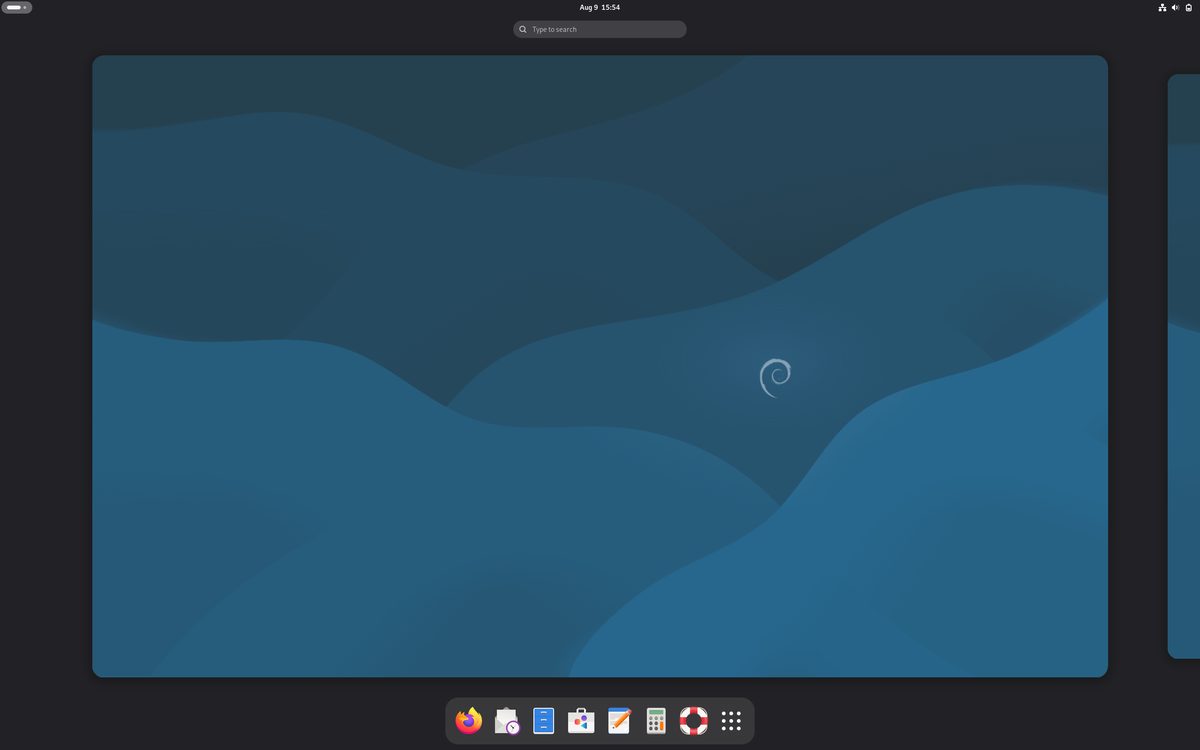
Debian is the bedrock. Running since 1993, entirely community-governed, and the base for Ubuntu, Mint, and hundreds of other distros, it is the closest thing Linux has to an institution. A stable release arrives roughly every two years, and once it ships, packages stop changing except for security fixes. Machines running Debian Stable are the ones nobody thinks about, because they never need thinking about.
The modern surprise is how usable Stable has become on the desktop. Firmware is now included in the installer, the desktop selection covers everything from GNOME to Xfce, and two years is no longer an eternity in software terms. Those who want fresher packages ride Debian Testing or Unstable, but the classic move remains: install Stable, forget it exists, and let it quietly outlast the hardware.
Strengths
- Legendary stability; a Debian Stable box just keeps running for years.
- Fully community-run with no corporate agenda to second-guess.
- Over 60,000 packages across more CPU architectures than any other distro.
- The universal base: skills and packages transfer to Ubuntu, Mint, and beyond.
- Security updates handled by one of the most trusted teams in open source.
Considerations
- Stable's packages age between releases by design; do not expect the newest apps.
- Newest-generation hardware may need a backported kernel to shine.
- Less hand-holding than its derivatives; some setup remains yours to do.
Standout features
- The two-year release rhythm: predictable, tested, and drama-free.
- apt and the .deb ecosystem, still the most widely documented packaging world.
- Backports repository lets you cherry-pick newer kernels and apps onto Stable.
- Runs on practically anything: from a Raspberry Pi to a mainframe.
Who it's for
Best for
People who prize reliability above novelty: servers, daily drivers you never want to reinstall, and anyone who wants Linux with no strings attached.Maybe not for
Chasing the latest software or gaming-focused freshness; a rolling distro or Fedora serves that hunger better.The Debian player profile
In Distro Fighter, Debian tends to win for people who…

Signature moves
Similar distros
Is Debian right for you?
Answer eight quick questions and watch 32 distros brawl to your pick. No signup, about 60 seconds.