Ubuntu
The default everyone documents; a fix for any problem is one search away.
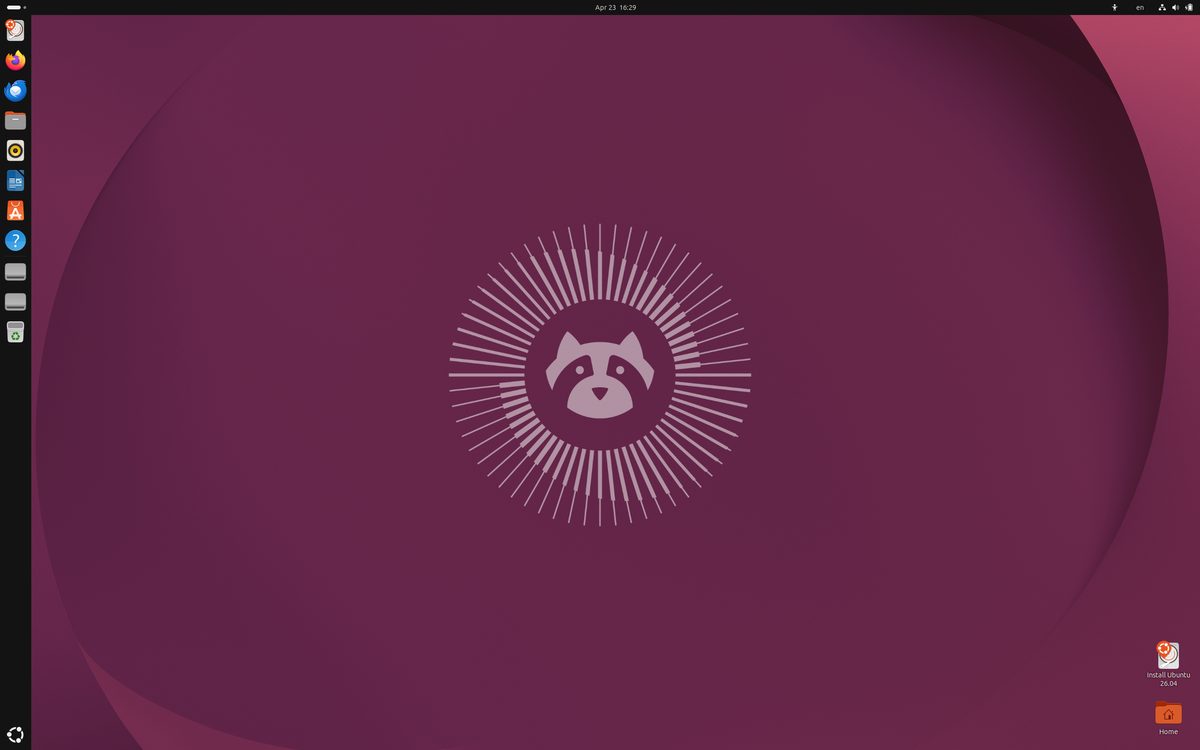
Ubuntu is the distro the rest of the Linux world measures itself against. Backed by Canonical since 2004, it turned Debian's famously solid base into something you could hand to anyone: a predictable release every six months, a Long Term Support (LTS) release every two years with five years of updates, and hardware support that usually just works on day one. When a tutorial, driver installer, or app package says "for Linux," it almost always means "tested on Ubuntu first."
That ubiquity is Ubuntu's superpower. Whatever goes wrong, someone has already asked the exact question and someone else has answered it. The trade-off is that Canonical makes opinionated calls, most visibly Snap packages, which auto-update in their own sandboxed format and start slower than native apps. Some people never notice; others switch to a derivative purely to avoid them. Either way, the underlying system is dependable, boring in the best sense, and an excellent long-term home.
Strengths
- The largest community and documentation pool in desktop Linux; every fix is a search away.
- LTS releases give you five years of updates on a stable base.
- Best-in-class hardware enablement, including recent laptops and NVIDIA driver installs.
- Nearly every commercial app, game, and dev tool tests against Ubuntu first.
- A clean, modern GNOME desktop with sensible Canonical polish on top.
Considerations
- Snap packages are mandatory for some apps (including Firefox) and start noticeably slower.
- Canonical sometimes steers the platform in directions the community dislikes before course-correcting.
- The stock GNOME workflow is a real adjustment if you come from a taskbar-style desktop.
Standout features
- LTS releases: install once, get updates for five years (ten with Ubuntu Pro, free for personal use).
- Massive first-party and third-party package availability: apt, Snap, and easy PPAs.
- The default target platform for Steam, VS Code, Docker, and most Linux tutorials.
- A whole family of official flavors (Kubuntu, Xubuntu, Lubuntu and more) sharing its base.
Who it's for
Best for
Anyone who wants the mainstream path: maximum compatibility, maximum documentation, and a system that employers, tutorials, and app vendors all assume you're running.Maybe not for
People who dislike Snaps or corporate stewardship, and anyone chasing the newest packages; a rolling distro will always be fresher.The Ubuntu player profile
In Distro Fighter, Ubuntu tends to win for people who…

Signature moves
Similar distros
Is Ubuntu right for you?
Answer eight quick questions and watch 32 distros brawl to your pick. No signup, about 60 seconds.