i3wm
Keyboard-driven tiling you build yourself; minimal, fast, exactly your config.
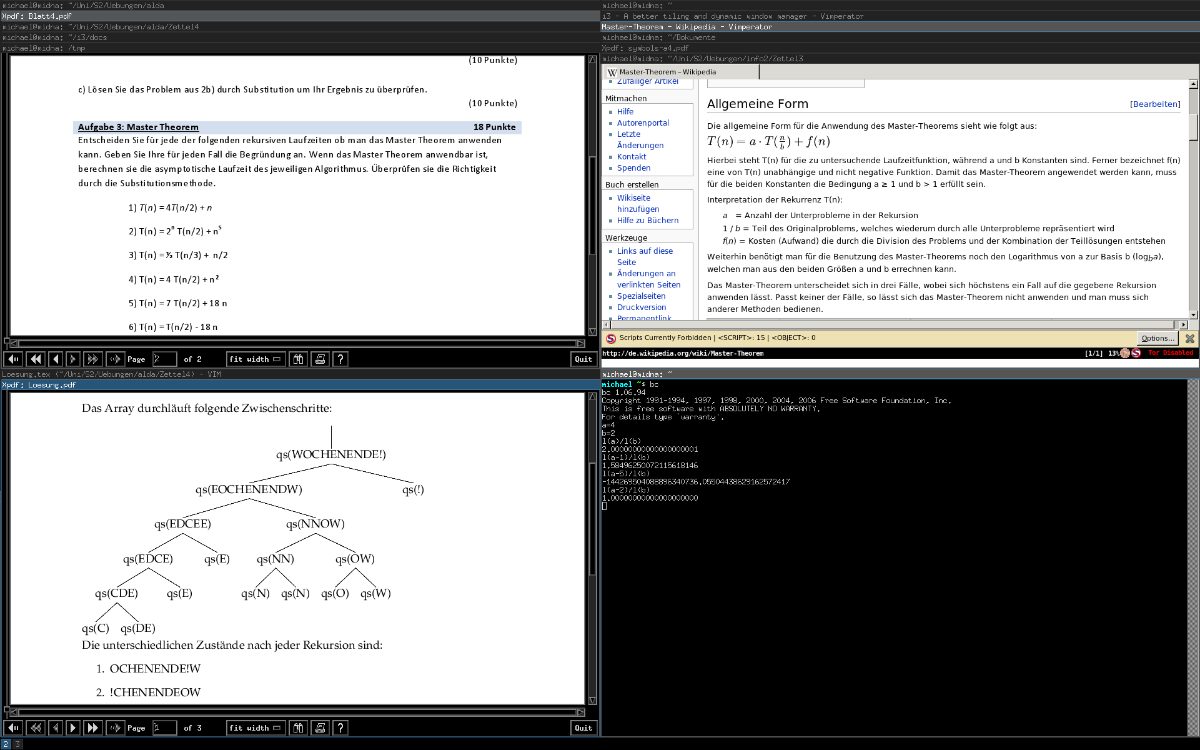
i3 is the tiling window manager that made tiling mainstream. Windows never overlap and never need dragging: they split the screen in clean rectangles, you command everything from the keyboard, and the entire configuration lives in one readable text file. Learn a dozen keybindings and the mouse becomes optional; learn thirty and it becomes vestigial.
The genius of i3 is restraint. It does exactly what a tiling WM must (tiling, workspaces, floating exceptions, a status bar) with sane defaults, a config syntax a newcomer can read, and documentation that answers questions before you ask them. It runs on X11, sips resources, and behaves identically for decades at a time. For keyboard-driven work, i3 is the standard everything else is compared to.
Strengths
- The gold-standard tiling workflow: fast, predictable, learnable.
- One plain-text config file; version it and carry it forever.
- Superb documentation, the best in the WM world.
- Tiny resource footprint; the desktop disappears entirely.
- Rock-stable: your muscle memory is safe for years.
Considerations
- X11 only; the Wayland continuation is its sibling Sway.
- You assemble the environment: bar, launcher, applets are your choices.
- The first week rewires habits; commitment required.
Standout features
- The config file that taught a generation to tile.
- i3bar and i3status: an entire status ecosystem.
- Scratchpad windows: hide-and-summon terminals on demand.
- Works identically on a laptop and a 1% -sized VM.
Who it's for
Best for
Keyboard-driven developers and terminal dwellers who want speed, focus, and total predictability.Maybe not for
Mouse-first users and anyone who wants a desktop assembled for them.The i3wm player profile
In Distro Fighter's desktop round, i3wm tends to win for people who…

Distros that ship it
Signature moves
Similar desktops
Is i3wm right for you?
Answer eight quick questions and watch the distro round crown your pick, then five more choose your desktop. No signup, about 60 seconds.