Sway
I3's tiling workflow on Wayland: same keybinds, modern display stack.
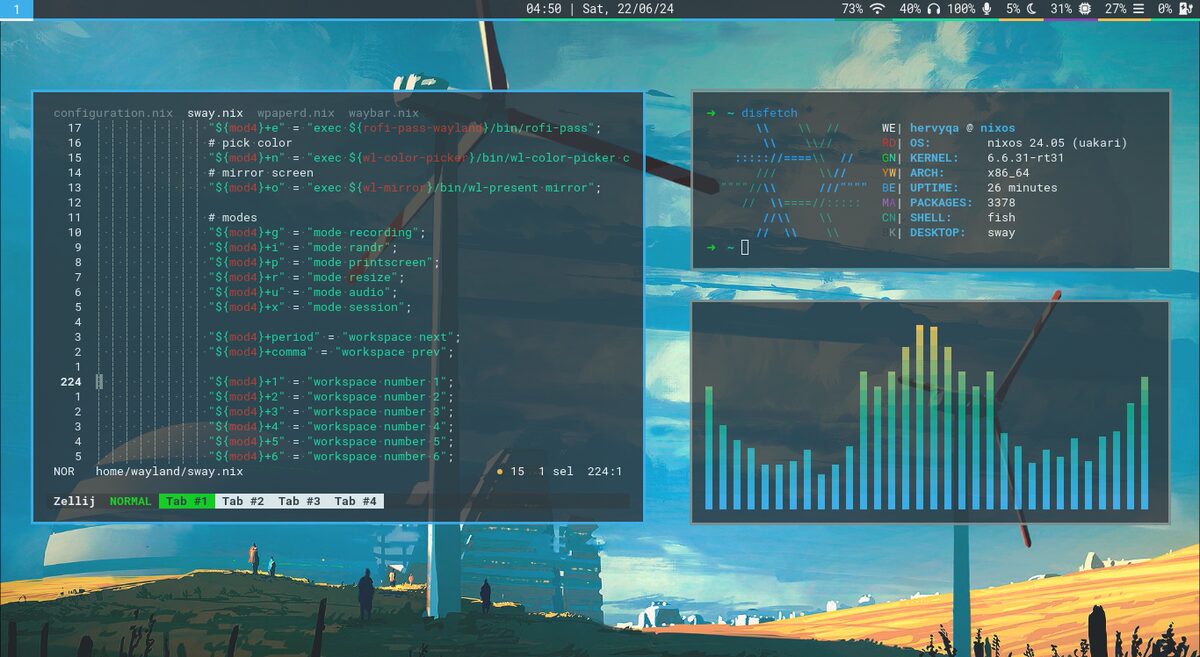
Sway is i3 for the Wayland era: a drop-in continuation so faithful that most i3 config files work unchanged. Same tiling model, same keybindings, same philosophy of doing one thing cleanly, but on wlroots, the modern display stack, with tear-free rendering, per-monitor scaling, and current input handling.
Sway leads the wlroots ecosystem that powers much of independent Wayland development, and its companions (swaybar, swaylock, swayidle) mirror the i3 toolchain. For i3 users, migration is an afternoon; for new tilers, it is the way to learn the classic workflow on the display server the future runs on.
Strengths
- i3-compatible configs: decades of dotfiles carry straight over.
- Wayland-native: no tearing, modern scaling and input.
- Anchor of the wlroots ecosystem and its tooling.
- Light, stable, and disciplined like its ancestor.
- Screen sharing and modern protocols well supported.
Considerations
- Assembly-required environment, same as i3.
- NVIDIA support works but has historically trailed AMD/Intel smoothness.
- Deliberately conservative: eye candy is not on the roadmap.
Standout features
- The smoothest X11-to-Wayland migration path in tiling.
- wlroots: the library that unlocked independent Wayland compositors.
- Full i3 IPC compatibility keeps the script ecosystem alive.
- A model of focused, no-drama open source maintenance.
Who it's for
Best for
i3 users moving to Wayland and keyboard-driven minimalists starting fresh on the modern stack.Maybe not for
Effects seekers (Hyprland exists for that) and mouse-centric workflows.The Sway player profile
In Distro Fighter's desktop round, Sway tends to win for people who…

Distros that ship it
Signature moves
Similar desktops
Is Sway right for you?
Answer eight quick questions and watch the distro round crown your pick, then five more choose your desktop. No signup, about 60 seconds.